
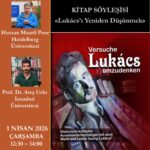
Book Launch / Kitap Tanıtımı: Versuche Lukács umzudenken (Hassan Maarfi Poor ile)
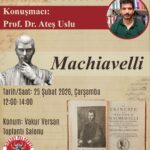
Machiavelli (İÜ SBF Siyaset Felsefesi Kulübü – Metin Okumaları)
Machiavelli okuma seminerimizde, Machiavelli’nin eserlerinin başlangıç kısımlarında okurlarına nasıl bir kavramsal çerçeve sunduğunu ele almayı amaçlıyoruz. Döneminin diğer yazarları gibi Machiavelli de eserlerinin her birine bir ithaf mektubu ile başlamıştı. Günümüz okurları için bu ithaf mektupları genellikle dikkat çekici olmayan, eserlerin ana gövdeleriyle ilgisiz ayrıntılar gibi görünse de eseri ortaya çıkaran koşullar, yazarın niyeti ve yazım stratejileri gibi konularda önemli veriler içerir. Bu okuma seminerimizde Machiavelli’nin dört eserinin (Prens, Söylevler, Savaş Sanatı ve Floransa Tarihi) ithaf bölümlerini okuyacağız.
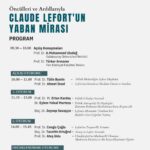
Claude Lefort’un Machiavelli Okuması: Marksizm Eleştirisi ve Bir Karşı-Eleştirinin Öğeleri
Özet Claude Lefort’un Marksizm’den kopuş sürecinde, 1956-1972 yılları arasında Machiavelli üzerine yaptığı çalışmaların özel bir önemi vardır: Machiavelli’nin politik düşüncesi, gerek Lefort’un Machiavel : le travail de l’oeuvre (Machiavelli: Yapıt Çalışması) başlığıyla 1972’de kitaplaşacak olan tezinin, gerekse bu dönemde yazdığı pek çok makalenin konusudur. Bu bildiride, Lefort’un Machiavelli’nin politik düşüncesi üzerine yaptığı çalışmaların Marksizm ile mesafelenme sürecinde nasıl bir rol oynadığı sorusuna yanıt arayacağım. Lefort’un politik tahakkümü merkeze alan yaklaşımı ile Marksist düşüncede temel sorunsalı teşkil eden sınıf çatışması ve sömürü merkezli yaklaşım arasındaki gerilim ve bu gerilimden hareketle Lefort’un Marksizm’e yönelik eleştirisi (özellikle Marx’ın ve Marksistlerin devlet-sivil toplum ayrışmasını…
Lukács’ın Son Dönem Etik Teorisi
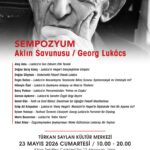
Aklın Savunusu: Georg Lukács Sempozyumu
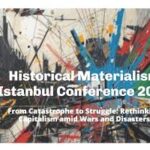
Lukács’s Unwritten Ethics: A Failed Attempt at Constructing a Post-Kantian Perfectionist Ethical Theory?
Paper presentation at Historical Materialism Istanbul Conference 2026. Abstract: Throughout the 1960s, Georg Lukács set himself the objective of writing an ethics from a Marxist perspective—a project that remained unfinished at his death in 1971. The preparatory work for this ethics, which soon developed into an independent and monumental study, The Ontology of Social Being, contains several references to the projected ethical theory. Moreover, in various published and unpublished writings from the 1960s, Lukács offers indications of the conceptual framework of his Marxist ethics. However, the philosopher’s deteriorating health and the extensive editorial work related to The Ontology of…
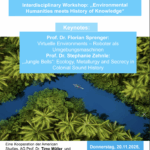
RECONSIDERING NATURE: LUKÁCS’S ONTOLOGICAL TURN AND ITS CONTEMPORARY RELEVANCE
Paper presentation in: Environmental Humanities meets History of Knowledge Workshop / 20-21 November 2025, Konstanz University In his later works throughout the 1960s, Georg Lukács sought to develop an ontological framework for the critical study of society. The result was The Ontology of Social Being, a monumental and posthumous work that revisited the question of the relationship between nature and society. Lukács conceived this project as an alternative to two dominant tendencies: the marginalization of nature within Western critical theory, and the naturalistic reductionism characteristic of much Eastern European Marxist literature on the dialectics of nature. The present paper aims…

Lukács’ Social Ontology: Ontological Emergence and the Specificity of the Political
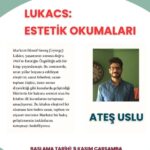
Lukács: Estetik Okumaları
Marksist filozof Georg (György) Lukács, yaşamının sonuna doğru, 1963’te Estetiğin Özgüllüğü adlı bir kitap yayımlamıştı. Bu seminerde, uzun yıllar boyunca edebiyat eleştirisi, sanat felsefesi, sanat-toplum ilişkisi, özne-nesne diyalektiği gibi konularda geliştirdiği fikirlerin bir bakıma sentezi olan bu kitabın ilk kısımlarını tartışmayı amaçlıyoruz. Bu kitabın eleştirel bir okuması üzerinden sanat, toplum ve siyaset teorisine Marksist bir bakış geliştirmenin imkânlarını tartışmayı hedefliyoruz.
Lukács: Estetik Okumaları
Marksist filozof Georg (György) Lukács, yaşamının sonuna doğru, 1963’te Estetiğin Özgüllüğü adlı bir kitap yayımlamıştı. Bu seminerde, uzun yıllar boyunca edebiyat eleştirisi, sanat felsefesi, sanat-toplum ilişkisi, özne-nesne diyalektiği gibi konularda geliştirdiği fikirlerin bir bakıma sentezi olan bu kitabın ilk kısımlarını tartışmayı amaçlıyoruz. Bu kitabın eleştirel bir okuması üzerinden sanat, toplum ve siyaset teorisine Marksist bir bakış geliştirmenin imkânlarını tartışmayı hedefliyoruz.
Lukács: Estetik Okumaları
Marksist filozof Georg (György) Lukács, yaşamının sonuna doğru, 1963’te Estetiğin Özgüllüğü adlı bir kitap yayımlamıştı. Bu seminerde, uzun yıllar boyunca edebiyat eleştirisi, sanat felsefesi, sanat-toplum ilişkisi, özne-nesne diyalektiği gibi konularda geliştirdiği fikirlerin bir bakıma sentezi olan bu kitabın ilk kısımlarını tartışmayı amaçlıyoruz. Bu kitabın eleştirel bir okuması üzerinden sanat, toplum ve siyaset teorisine Marksist bir bakış geliştirmenin imkânlarını tartışmayı hedefliyoruz.