Ateş Uslu
  • HAKKINDA
    • ÖZGEÇMİŞ
  • Yazılar ve Video Yayınları
    • Metodoloji ve Tarihyazımı
    • Eskiçağ ve Ortaçağ
      • Hint Düşüncesi
      • Çin Düşüncesi
      • Yunan Düşüncesi
      • Ortaçağ (11.-13. Yüzyıl)
    • 14. Yüzyıldan Aydınlanmaya
      • İslam Düşüncesi
      • Hümanizm-Rönesans
      • Aydınlanma Çağı
    • Uzun 19. Yüzyıl
      • Fransız Devrimi ve Sonrası
      • Marx, Engels ve Marksizm
      • İrrasyonalizm
      • Batı Dışı Dünya
      • Opera Tarihi
    • Yirminci Yüzyıl
      • György Lukács
      • Orta Avrupa’da Marksizm
    • Milliyetçilik
    • Güncelden Teoriye
  • Söyleşiler
  • Konferanslar
  • DERSLER
  • Eğitimler
  • About
    • Résumé
    • CV
    • LIST OF PUBLICATIONS
    • RESEARCH AND TEACHING
GenelSyllabus

WORK AND GENDER IN POLITICAL THOUGHT (18TH–19TH CENTURIES)

> Ateş Uslu 19 Ekim 2025
written by Ateş Uslu

Prof. Ateş USLU, Ph.D


Course Syllabus

Konstanz University, 2025-2026 Winter Semester


Code: HIS-42950 (3 ECTS); HIS-43170 (6 ECTS)

Time: Monday, 13:30-15:00        Venue: F424

Office hours: Monday, 12:00-13:00, E310f, by appointment (ates.uslu@uni-konstanz.de)


Short Description

This course explores the intersection of work and gender within the political thought of the eighteenth and nineteenth centuries, focusing on how pivotal philosophers and ideologists of the period conceptualized the division of labor and gender roles in their political works. It emphasizes the historical development of the division of labor and gender in political literature, and critically examines the legacy of these ideas in shaping modern conceptions of work and social roles. The course offers an engagement with key texts in political theory while integrating feminist and global perspectives on labor and gender. It is grounded in close readings of works by thinkers such as Jean-Jacques Rousseau, Mary Wollstonecraft, Immanuel Kant, Karl Marx, John Stuart Mill, among others, as well as political thought from non-Western traditions, including thinkers from India, China, and the Ottoman Empire. Students are encouraged to explore how gendered and racialized divisions of labor were theorized within different ideological traditions and to question the boundaries of the established canon.


Requirements


Requirements for all attendees:

  • regular and active participation (max. 2 absences allowed)
  • one poster presentation:
  • a preparatory meeting with the lecturer
  • outline submission (poster files must be uploaded to the designated folder in ILIAS in good time before the session)
  • poster presentation (15 minutes), on a weekly compulsory reading and two additional self-researched texts (books, book chapters, articles – primary source or secondary literature). Basic instructions for creating a poster can be found here: https://guides.lib.unc.edu/posters/home
  • in-class discussion (15 minutes)


Supplementary requirements for students who have selected the 6 ECTS course:

  • one final paper
  • a preparatory meeting with the lecturer
  • final paper submission (10 pages, Times New Roman, 1.5 spacing) on a topic related to the course theme but not covered during the lectures. Due date: 19 January 2025.
  • paper review meeting with the lecturer


For the use of AI, see the guidelines “AI tools in the context of teaching, learning and exams” (University of Konstanz): https://www.uni-konstanz.de/en/lehren/weiterentwicklung-der-lehre/ai-in-teaching/

Weekly Plan (Summary)


20 October 2025 Week 1 Introduction: Methodology and Historiography
27 October 2025 Week 2 Work, Class and Gender in Rousseau’s Works (1st Part)
3 November 2025 Week 3 Work, Class and Gender in Rousseau’s Works (2nd Part)
10 November 2025 Week 4 Whose Autonomy? Kant on Wage Labourers and Women
17 November 2025 Week 5 The Specter of Haiti Revolution: Kant and Hegel on Slave Labour and Racial Division of Labour
24 November 2025 Week 6 Women, Workers, and the “Rabble” in Hegel’s Political Thought
1 December 2025 Week 7 Production, Division and Labour and Class Struggle at the Centre of Political Theory: Marx and Engels (1st Part)
8 December 2025 Week 8 Production, Division and Labour and Class Struggle at the Centre of Political Theory: Marx and Engels (2nd Part)
15 December 2025 Week 9 Harriet Taylor Mill and John Stuart Mill on the Working Poor and the Enslavement of Women (1st Part)
22 December 2025 Week 10 Harriet Taylor Mill and John Stuart Mill on the Working Poor and the Enslavement of Women (2nd Part)
23 December 2025-

6 January 2026

Weeks 11-12 Lecture-free period
12 January 2026 Week 13 Challenges to Casteism and Patriarchy in Colonial India: The Case of Jyotirao and Savitribai Phule
19 January 2026 Week 14 Fighting for Women’s Liberation in Late Imperial China: He-Yin Zhen
26 January 2026 Week 15 Socialist and Feminist Press in the Late Ottoman Empire
2 February 2026 Week 16 Conclusion


Weekly Plan and Reading List

The schedule includes literature that all seminar participants must read and prepare in advance. Recommended further readings will be provided throughout the semester.


20 October 2025 Week 1 Introduction: Methodology and Historiography
  Main reading: Cholbi, Michael. “Philosophical Approaches to Work and Labor.” The Stanford Encyclopedia of Philosophy (Summer 2023 Edition), Edward N. Zalta & Uri Nodelman (eds.), URL: https://plato.stanford.edu/entries/work-labor/


  Further readings: Cambridge School:

Skinner, Quentin. “Meaning and Understanding in the History of Ideas”, History and Theory 8:1 (1969): 3-53.

Pocock, J.G.A. Political Thought and History: Essays on Theory and Method (Cambridge: Cambridge University Press, 2009).


Conceptual History:

Koselleck, Reinhart, The Practice of Conceptual History, translated by Todd Samuel Presner et al. (Stanford: Stanford University Press, 1988).


Sussex School (Intellectual History):

Collini, Stefan. “General Introduction”, Collini, Stefan; Whatmore, Richard; Young, Brian (ed.) Economy, Polity, and Society: British Intellectual History 1750-1950 (Cambridge: Cambridge University Press, 2000). 1-21.


Historical Materialism:

Wood, Neal. “The Social History of Political Theory”, Political Theory 6.3 (1978): 345-367.


Feminist Historiography:

Okin, Susan Moller. Women in Western Political Thought (Princeton: Princeton University Press, 1979). 3-12.

Pateman, Carole. The Sexual Contract (Stanford: Stanford University Press, 1988).


Critique of Heteronormativity:

Wittig, Monique. The Straight Mind and Other Essays (Boston: Beacon Press, 1992).


Critique of Colonialism and Racism:

James, C.L.R. The Black Jacobins: Toussaint L’Ouverture and the San Domingo Revolution (Vintage, 1989).

Mills, Charles W. The Racial Contract (Ithaca: Cornell University Press, 1997.


27 October 2025 Week 2 Work, Class and Gender in Rousseau’s Works (Part 1)
  Main Reading: Hirschmann, Nancy J. Gender, Class, and Freedom in Modern Political Theory, (Princeton University Press, 2007). 118-138.


  Further Readings (Primary Sources): Rousseau, Jean-Jacques. “Discourse on the Origin and the Foundations of Inequality Among Men or Second Discourse”, The Discourses and Other Early Political Writings, ed. by Victor Gourevitch (Cambridge: Cambridge University Press, 2018), 115-229 (esp. pp. 165-180).


  Further Readings (Literature): Botting, Eileen Hunt. “The Early Rousseau’s Egalitarian Feminism: A Philosophical Convergence with Madame Dupin and ‘The Critique of the Spirit of the Laws’”, History of European Ideas, 43:7 (2017): 732-744.

Graeber, David & Wengrow, David. The Dawn of Everything: A New History of Humanity (Signal Books, 2021), Chapter 2.

Neuhouser, Frederick. Rousseau’s Critique of Inequality: Reconstructing the Second Discourse (Cambridge: Cambridge University Press, 2014).

Wokler, Robert. Rousseau: A Very Short Introduction (Oxford: Oxford University Press, 2001).

Wood, Ellen Meiksins. Liberty and Property: A Social History of Western Political Thought from the Renaissance to Enlightenment (London: Verso, 2012), 189-209.


3 November 2025 Week 3 Work, Class and Gender in Rousseau’s Works (Part 2)
    Hirschmann, Nancy J. Gender, Class, and Freedom in Modern Political Theory, (Princeton University Press, 2007). 138-167.


10 November 2025 Week 4 Whose Autonomy? Kant on Wage Labourers and Women
    Pascoe, J. (2015) “Domestic Labor, Citizenship, and Exceptionalism: Rethinking Kant’s ‘Woman Problem’”, Journal of Social Philosophy, 46: 340-356. https://doi.org/10.1111/josp.12102


17 November 2025 Week 5 The Specter of Haiti Revolution: Kant and Hegel on Slave Labour and Racial Division of Labour
    Huseyinzadegan, Dilek. “Conjectures on Kant and the Haitian Revolution”, The Southern Journal of Philosophy 62 (2024): 72-81.


24 November 2025 Week 6 Women, Workers, and the “Rabble” in Hegel’s Political Thought
    Lombardo, William. “Hegel on Labor”, The Concept of Work in the History of European Philosophy: By the Sweat of Your Brow. Cham: Springer, 2025. 117-129.


1 December 2025 Week 7 Production, Division and Labour and Class Struggle at the Centre of Political Theory: Marx and Engels (1st Part)
    Askonas, Jonathan. “The Abolition of the Division of Labor in the Work of Karl Marx”, The Concept of Work in the History of European Philosophy: By the Sweat of Your Brow (Cham: Springer, 2025). 147-162.


8 December 2025 Week 8 Production, Division and Labour and Class Struggle at the Centre of Political Theory: Marx and Engels (2nd Part)
    Bannerji, Himani. “Building from Marx: Reflections on ‘Race’, Gender and Class”, The Ideological Condition: Selected Essays on History, Race and Gender (Leiden: Brill, 2020). pp. 3-21.


15 December 2025 Week 9 Harriet Taylor Mill and John Stuart Mill on the Working Poor and the Enslavement of Women (1st Part)
    Hirschmann, Nancy J. Gender, Class, and Freedom in Modern Political Theory, (Princeton University Press, 2007). 213-249.


22 December 2025 Week 10 Harriet Taylor Mill and John Stuart Mill on the Working Poor and the Enslavement of Women (2nd Part)
    Hirschmann, Nancy J. Gender, Class, and Freedom in Modern Political Theory, (Princeton University Press, 2007). 249-273.


23 December 2025-

6 January 2026

Weeks 11-12 Lecture-free period
12 January 2026 Week 13 Challenges to Casteism and Patriarchy in Colonial India: The Case of Jyotirao and Savitribai Phule
    Debjani Ghosal. “Jyotiba Phule: The Radical Reformer and the Crusader against Caste, Untouchability and Gender Discrimination”, Laskar, Nazmul Hussain & Jabin, Nasrin (ed.) Political Thought: Indian and Western (New Delhi: Authors Press, 2022), pp. 132-143.

Pratyay Dutta. “Reminiscing the Socio-Political and Economic Ideas of Savitribai Phule: A Brief Assessment”, Laskar, Nazmul Hussain & Jabin, Nasrin (ed.) Political Thought: Indian and Western (New Delhi: Authors Press, 2022), pp.  144-152.


19 January 2026 Week 14 Fighting for Women’s Liberation in Late Imperial China: He-Yin Zhen
    Wesoky, Sharon R. “He-Yin Zhen’s ‘Revolution in Women’s World’: Anarchist Theories of Women’s Liberation”, Chinese Modernity and Socialist Feminist Theory (London: Routledge, 2022). 15-40.


26 January 2026 Week 15 Socialist and Feminist Press in the Late Ottoman Empire
    Banu Turnaoglu. “Early Socialism and the Impact of the Paris Commune on the Ottoman Political Imagination in the Nineteenth Century”, Global Intellectual History 10:7(2023): 611-640. DOI: 10.1080/23801883.2023.2258463

Çakır, Serpil. “Feminism and feminist history-writing in Turkey: The discovery of Ottoman feminism”, Aspasia 1:1 (2007): 61-83.


2 February 2026 Week 16 Conclusion
    Hirschmann, Nancy J.  Gender, Class, and Freedom in Modern Political Theory, (Princeton University Press, 2007). 274-289.


19 Ekim 2025 0 comment
FacebookTwitterLinkedinWhatsappEmail
GenelGüncelden Teoriye

Marksistler ve diğerleri: “Beton sol” ve “woke” ikileminden nasıl çıkarız?

> Ateş Uslu 14 Ekim 2025
written by Ateş Uslu

“Marksizm’i Marksizm yapan, metodolojisi ve toplumsal-politik amacıdır.”

14 Ekim 2025 0 comment
FacebookTwitterLinkedinWhatsappEmail
Söyleşiler

“Toplumdaki hiçbir olgu ebedi değildir!” (Derya Gürses Tarbuck ile Söyleşi)

> Ateş Uslu 8 Eylül 2024
written by Ateş Uslu

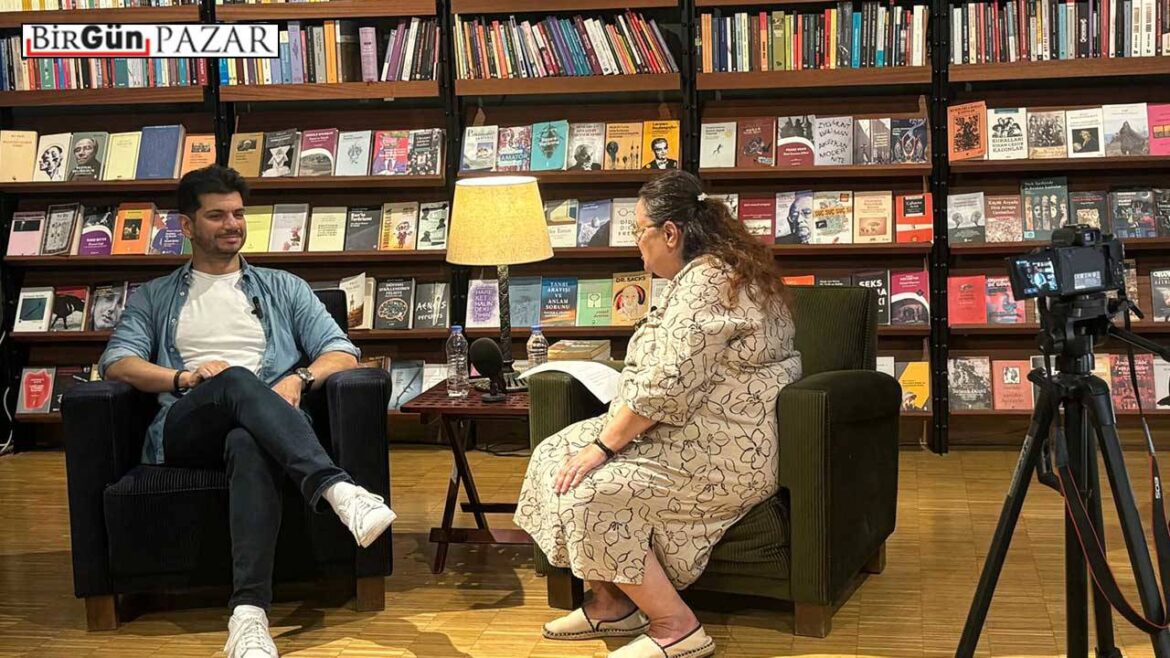
“Herkes için Bilim” sohbetleri kapsamında Derya Gürses-Tarbuck, uzman akademisyenlerle sohbet ediyor, konuklarının araştırma alanlarını, çalışmalarını ve günümüz akademisinin hâllerini izleyicilerle BirGün TV ekranında buluşturmaya devam ediyor. Akademi, yaşam ve dünya arasındaki ilişkinin nabzı, bu sohbetlerle de atıyor. Bu hafta “Herkes için Bilim” programında Prof. Dr. Ateş Uslu’yu ağırlıyoruz! Akademik çalışmalarını İstanbul Üniversitesi Siyaset Bilimi ve Uluslararası İlişkiler bölümünde devam ettiren Prof. Dr. Uslu, siyaset bilimi ile düşünce tarihi alanlarının kesişimini araştırmaktadır. Onuncu bölümün konuğu Prof. Dr. Uslu, yayınlarıyla Türkçe literatüre büyük katkı sunmuştur. Bu bölümde Doç. Dr. Tarbuck, konuğunun yayınlarını, inceleme ve yazı alanlarını konuştu. Prof. Dr. Uslu, ideolojilere ve teorisyenlere özel ilgi duymakta, akademik araştırmalarını ve verdiği dersleri buna göre şekillendirdiğini bu programda paylaşmaktadır.

8 Eylül 2024 0 comment
FacebookTwitterLinkedinWhatsappEmail
GenelSöyleşiler

Sosyal bilimlerde nesnellik pek mümkün değil (Derya Gürses Tarbuck ile söyleşi)

> Ateş Uslu 8 Eylül 2024
written by Ateş Uslu

BirGün’e konuşan Ateş Uslu “Topluma baktığında ben sınıflı bir toplum görüyorum ve toplumsal cinsiyet tahakkümünün olduğu bir toplum görüyorum. Geçmişe de baktığımda tarihi aslında bu iki unsur üzerinden okumanın değerli olduğunu düşünüyorum” diyor.

8 Eylül 2024 0 comment
FacebookTwitterLinkedinWhatsappEmail
Eskiçağ ve OrtaçağYunan Düşüncesi

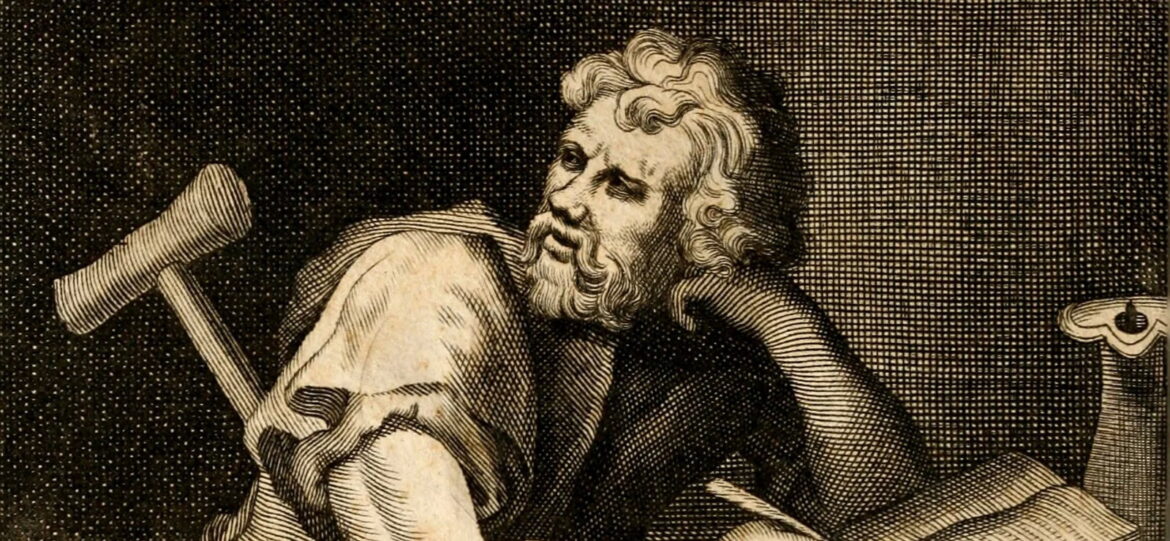
Apolitik Stoacılık: Bir Efsaneyi Geride Bırakırken

> Ateş Uslu 10 Temmuz 2024
written by Ateş Uslu
10 Temmuz 2024 0 comment
FacebookTwitterLinkedinWhatsappEmail
GenelGyörgy LukácsİrrasyonalizmYirminci Yüzyıl

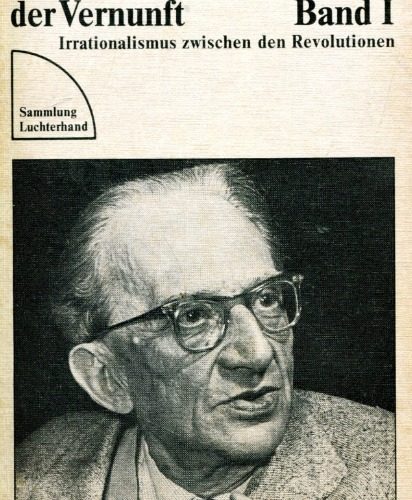
Nietzsche ve Naziler – Lukács ve Nietzsche

> Ateş Uslu 1 Temmuz 2024
written by Ateş Uslu
1 Temmuz 2024 0 comment
FacebookTwitterLinkedinWhatsappEmail
Metodoloji ve TarihyazımıYazılar ve Video Yayınları

Siyasal Düşünce Tarihçiliğinde Tarihsel Materyalist Yaklaşımlar: Bir Ufuk Taraması

> Ateş Uslu 1 Mayıs 2024
written by Ateş Uslu

Toplumsal Tarih, sayı 365, Mayıs 2024, s. 50-55.

1 Mayıs 2024 0 comment
FacebookTwitterLinkedinWhatsappEmail
Fransız Devrimi ve SonrasıUzun 19. Yüzyıl

Jakobenliğin Siyasal Düşünceleri

> Ateş Uslu 3 Nisan 2024
written by Ateş Uslu

“Edmund Burke veya Lamartine tarzında ‘Fransız Devrimi aslında fikirlerin gerçekteki izdüşümlerini unutmuş olan birtakım cani, vahşi, insanlıktan çıkmış olan kişiler tarafından yapılmıştır’ gibi bir ön kabulümüz olursa Jakobenleri olmadıkları bir yere koymuş oluruz. Marat, Saint-Just, Robespierre, Danton, adı unutulmuş pek çok yazar, Jakoben olmayan ama onlara bir şekilde destek vermiş olan pek çok hareketten insan, dönemin devrimci kadınları, dönemin isyan eden Haiti’li köleleri, tüm bunların referanslarını ve düşünce dünyalarını dönemin dinamik toplumsal-siyasi gelişmeleri içinde değerlendirirsek zengin bir Jakobenizm idrakine sahip olabiliriz.”

3 Nisan 2024 0 comment
FacebookTwitterLinkedinWhatsappEmail
Eskiçağ ve OrtaçağYunan Düşüncesi

Yurttaşlık, Kulluk, Kozmopolitizm: Atina Yurttaşlığını Aşmak

> Ateş Uslu 19 Kasım 2023
written by Ateş Uslu
19 Kasım 2023 0 comment
FacebookTwitterLinkedinWhatsappEmail
Eskiçağ ve OrtaçağYunan Düşüncesi

Klasik Dönem Yunan Yurttaşlığını Klasik Dönemde Bırakmak

> Ateş Uslu 9 Kasım 2023
written by Ateş Uslu
9 Kasım 2023 0 comment
FacebookTwitterLinkedinWhatsappEmail
Newer Posts
Older Posts

Konferanslar

  • Yirminci Yüzyıl Başında Burjuva Devrimleri (1906-1908) @ 25 Mayıs 2014 13:00
  • 19. Yüzyılda Osmanlı Gayrimüslim Toplulukları: Sınıfsal ve Siyasal Dinamikler @ 5 Eylül 2015 10:00
  • Sermaye Çağında Ütopik Sosyalizm (1840-1900) @ 21 Kasım 2015 15:30
  • Tarihsel Materyalizm Açısından İslam Siyasal Düşüncesi @ 25 Aralık 2016
  • G. Sorel ve W. Benjamin’de Şiddet Üzerine @ 9 Mayıs 2017 13:45
  • Facebook
  • Twitter
  • Instagram
  • Youtube
  • Email

ates.uslu@istanbul.edu.tr
www.atesuslu.com

Ateş Uslu
  • HAKKINDA
    • ÖZGEÇMİŞ
  • Yazılar ve Video Yayınları
    • Metodoloji ve Tarihyazımı
    • Eskiçağ ve Ortaçağ
      • Hint Düşüncesi
      • Çin Düşüncesi
      • Yunan Düşüncesi
      • Ortaçağ (11.-13. Yüzyıl)
    • 14. Yüzyıldan Aydınlanmaya
      • İslam Düşüncesi
      • Hümanizm-Rönesans
      • Aydınlanma Çağı
    • Uzun 19. Yüzyıl
      • Fransız Devrimi ve Sonrası
      • Marx, Engels ve Marksizm
      • İrrasyonalizm
      • Batı Dışı Dünya
      • Opera Tarihi
    • Yirminci Yüzyıl
      • György Lukács
      • Orta Avrupa’da Marksizm
    • Milliyetçilik
    • Güncelden Teoriye
  • Söyleşiler
  • Konferanslar
  • DERSLER
  • Eğitimler
  • About
    • Résumé
    • CV
    • LIST OF PUBLICATIONS
    • RESEARCH AND TEACHING